Genealogy

Newspaper Trawl

I talked to my mom this morning, and she solved one family puzzle and inadvertently created another. After doing some cursory searching and getting nowhere, I thought I’d poke around in some online newspaper archives. Boy, is that ever entertaining!

Untitled
Wright County Monitor (Clarion, Iowa), 11 January 1951, Page 4

Pretty much everything in this particular paper seems to be comprised of chatty nosypantsing. I’ve gotten through about 1/3 of the 370 pages containing the name Meineke, and so far, every single reference has been about someone having dinner at someone else’s house, or someone joining or hosting some variety of social club.

Genealogy

Today’s Findings

It’s more of a singular finding, actually, than a findings. I may have misunderstood, but I thought Estelle Hoover (grandma’s grandmother) was paralyzed later in life (polio?). Not so! Whatever happened to her occurred at a young age, because she was listed in the 1880 census as being paralyzed. She would have been about seven years old in 1880.

Other than that, I’ve been cleaning up census info and trying to fill in some of the gaps as I come across them, which is why I saw the reference to Estelle being paralyzed.

Something else I turned up, which might be something and might be nothing. The 1870 census lists a Henry Hoover married to a Tallula, with a son named Adolphus. I’ve been assuming that this is Estelle’s family. The names are uncommon and the ages and locations match. I wouldn’t have thought twice about it, if it hadn’t been for the fact that Henry’s occupation is listed as a physician. I don’t think that can be correct. If it’s not, then the enumerator made a mistake, Henry or Tallula lied, or it’s not the same family after all.

1870 US Census
1870 US Census, lines 86-88

I just think it’s unlikely that Henry, who is listed as a dairyman in the 1880 census, a peddler the 1889-1890 Atlanta directory, and a repairman in the 1900 census, could have been a physician in 1870. I mean, I realize that doctors weren’t quite the same thing back then as they are now, but that’s a pretty big stretch even so. On he other hand, that would have been right after the Civil War. If he’d fought in the war, who knows what sort of position he held? He might have actually been trained as a doctor or medic, then not stayed with it after the war.

Genealogy

Thomas Hamilton

My aunt Dottie asked if there were any Revolutionary War soldiers in the Lord line of our family tree. Possibly (they were certainly in the right place at the right time). So I did some digging and found that my 7th great grandfather, Thomas Hamilton, was indeed a Revolutionary War soldier.

I only stumbled across that last night, which is odd, because I only just found Dottie’s email in my spam folder this afternoon. I haven’t a clue why it ended up there, as there’s not anything remotely spammy about it.

Anyway!

The Thomas Hamilton in question is buried in the White Settlement Cemetery in Tomkins County, New York. His (modern) headstone identifies him as a private in the 10th Pennsylvania Regiment. That seems to be incorrect, though. There was an interesting a discussion on one of the Hamilton surname listserves that details why the Thomas Hamilton who was a private in the 10th PA can’t be “our” Thomas. And, as well, a good reason to think that our Thomas was actually in the Northampton County Militia.

What we do know about our Thomas is that he was a surveyor. He married a woman named Sarah Westfall. They had five children. In 1875 the family, along with Joseph Brearley and his wife, Lydia Colborn, moved to Muncy, Pennsylvania. While crossing Sweet Arrow Creek, their wagon was overcome with water and Sarah and Joseph both drowned. Thomas later married Joseph’s wife, Lydia. (Since it ends in a wedding, I guess that makes it a comedy, right?)

Genealogy, Pets, Photography

Little Things

It’s nice to have crazillions of databases searchable from one interface (Ancestry.com). It’s easy to forget that not everything tha\’s available online is accessible through Ancestry, though, even when the state/county in question has opened their databases to Ancestry. Things slip through the cracks.

I looked and looked and looked and could find no marriage records for Henry Meineke and Mary Shoemaker. I found birth records for their children, which listed Mary’s maiden name, but no marriage record. It occurred to me, though, to see if Illinois had their vital records online. And they do. And look at what I found!

MEINECKE, HEINRICH–SHUMAKER, MARIA ANNA–1894-08-23 00K/0070 00010815 MC LEAN

I don’t know why they were married in McLean County[1], but that’s definitely my grandfather’s paternal grandparents. And interestingly, though the Minnesota birth index lists her as Mary Shoemaker, grandpa spelled her name Shumaker, which seems to be the way she spelled it at the time of her marriage. Also, I now have a middle name and a known variant spelling of her first name. Since I have not been able to trace her parentage, this could be helpful. Or not, as it’s a common name. But it’s a new clue, and those are always exciting.

It also narrows down her possible emigration date, as she supposedly came over not long before marrying. Another clue.

And, because I have nothing topical to illustrate this post with, I shall include some random Harriet cuteness.

IMG_1959

She is of German extraction, at least!

_______________________________________
1. Actually, this is clue number 3. There’s a gap between the 1870 census (the first one that Henry shows up in, as his family arrived in the US in 1869), which puts them in Tazewell County IL, and the 1900 census, which puts them in Wright County IA. The 1890 census is useless, as most of it was destroyed in a fire. But what about 1880? I can’t find Henry, his parents, or any of his siblings in the 1880 census.

Now I can at least look for him in McLean County IL. And, I’ve got reason to believe that not all of them stayed in Tazewell County. Maybe even none of them. There are several possible candidates in the Illinois Death Index. I also need to take anther look at the Illinois voter records, because I may have enough information to start weeding down those “possibles,” too.

Unfortunately, it’s possible that the whole family was somehow missed during 1880 census. It happens.

Genealogy, Photography

Instant Review: Firefox 3.0

A) So far, so good. My only complaint is that the text size increase/decrease (ctrl + mouse scroll wheel up/down) is backwards. That will take some getting used to. I really like the basic skin that comes with it, and I love the enhanced browsing history. It’s also supposedly much more memory efficient, so hopefully it won’t be as slow to wake up or quite so crashy.

B) The chairs I mentioned yesterday? The ones that sat upstairs, in the public area, for months and months? The ones that I was sure would sit in the SLIS hallway for more months and months? Gone. I’m glad I got a photo when I did, even if it was a crappy one.

C) Genealogy update:

I don’t know what got into me, but I started looking at my younger brothers’ father’s family. They’re no relation to me, but my brothers are, and they might be interested. Anyway, the Saxons? Apparently they were one of the first white families to settle in what later became Connorsville, Fayette County. Alexander Saxon arrived there in 1811, just a year or two after John Connor (brother of William Connor), the town’s namesake.

The family stayed in Fayette County until Herbert Saxon moved to Rush County. I haven’t yet figured out when that was. He was still there in 1920, according to the census.

And now I’m curious to go back and look at some of the old family photos that my brothers’ dad left at my mom’s. I may be able to put some of them into context, now.

And speaking of which! I found this photo a genealogy board. A woman had bought it from an eBay vendor who’d gotten it from an estate sale in Gulf Shores, Alabama. It has the names Robert and Joseph Saxon on the back. The guy on the left bears a scary resemblance to Herb. Actually to both Herbs II and III.

Robert Saxon and Joseph Saxon

Genealogy, Photography

Morning Clouds

Picture 008b

I spent last night cleaning up alternate names in my genealogy database. If I’d RTFM, I’d’ve input them correctly the first time, but I didn’t. So now the alternate names are properly cross-indexed, and that you can look up someone by any of their names (assuming I added alternate names to that record).

This becomes important when you’re looking for people like my great grandfather, who was named Cecil but went by John. Both names now show up properly in the index.

Next, to fix the census fields so that they display properly. Aieee! That is going to be a nightmare. Along with that, occupations also need to be moved so that they no longer display as dates.

RTFM, folks!

Genealogy

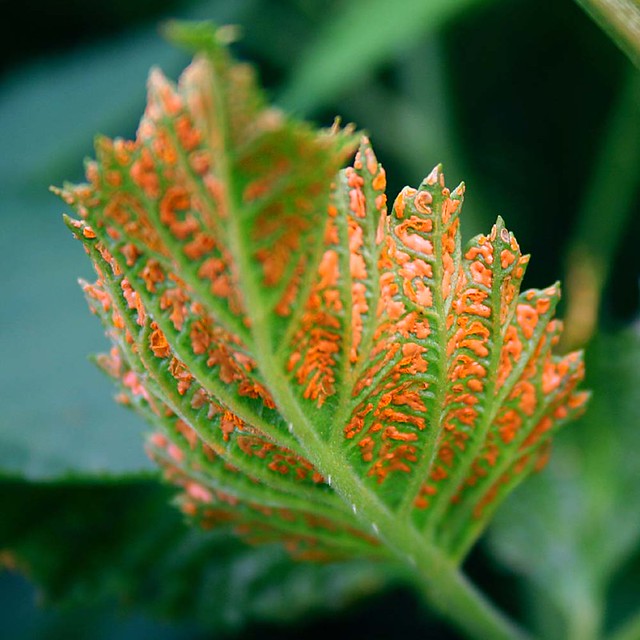
A Leaf

IMG_1923

My mom called the other day to tell me that my uncle–who apparently doesn’t know how to call or e-mail me himself–wanted another family history story. So, here goes. I have traced one section of the Lord line back to Joan de Beaufort (my 18th great grandmother), and from her, back to Cerdic of Wessex (my 50th great grandfather). On the road from Joan to Cerdic, things become increasingly mythic (I mean, we’re talking 6th century, folks, so this family history story is more of a fairytale).

As yet, I have found no witches. Sorry, Cal! You’ll have to make do with some minor Plantagenets.

This is also a cautionary tale. When you use other people’s research (or “research”), you should take it with an entire mine full of salt unless and until you can verify it. I have found cases where people were married before they were born, or were buried before they died, or an ouroboros where the father was his own son, so the pedigree was linked in an infinite loop, or people of European descent who were allegedly born in the Americas before Columbus sailed the ocean blue. If you import sections of other people’s trees, you will inherit their problems.

Genealogy, Photography

Filing Basquills

IMG_1062

I finally got the mountains of papers under some sort of control yesterday. I spent most of the day on it, finishing up at about 11:00 last night. I still have a small stack of strays, but I’m out of file folders, hanging files, and motivation.

Only a few of them are directly related to me. My theory is that somehow, they’re all related, though, so I’ve made a little side-project out of trying to connect them up.

Genealogy, Music

Happy Accidents

One of the things that makes genealogical research difficult is transcription errors. I think I’ve probably mentioned this before, but I’ve got a wonderful visual example of what I’m talking about, so I thought I’d share. Also, it’s a minor triumph. I spent four hours last night trying to connect up a couple of stray Basquills. I wasn’t entirely successful, but in the process, I stumbled across the 1871 English census for a family I’d given up on. Huzzah!

So, without further ado, I’d like to introduce y’all to Rennie and Eline Basguel. Or, rather, Denis and Ellen Basquill. For a start, the enumerator bolloxed up Ellen’s first name. And then, for good measure, the transcriber turned Dennis into Rennie and Basquil into Basguel.

1871 England Census

Denis is my great-great-great uncle, by the way (Walter’s elder brother). He and Ellen Carney were married in Forkfield, County Mayo, on 15 April 1862. They emigrated to England by 1871, then to the US (Denis came over in 1883 and Ellen brought the children in 1890). The family finally settled in Fall River, Massachusetts. (Yes, the home of Lizzie Borden. I wonder what they, as newcomers to this country, made of her parents’ murders?)

I’ve filed corrections with Ancestry.com, and they ought to show up in the next few days. In the meantime, I’m delighted with this minor accidental victory.

Genealogy

Christian and Henriette

I mentioned that I had found the names of Henry Meineke’s parents in the 1925 Iowa census, and that I was almost certain I’d found the same family in the 1870 US census, living in Illinois. Well, I later found that the Auguste on the 1870 census was a daughter, not a son, as I’d assumed. She married ended up in Iowa. I know this, because I stumbled across Auguste in the 1925 Iowa census, married to a man named Henry Sheppelman. She was born in Illinois, and her parents were Christ Meinicke and Henrietta Liddke.

At that point, I was convinced that the folks in the 1870 US census belonged to Henry. Now, the question was to find their emigration information. When did they come over? According to the 1900 census, they (or Henry, at least) emigrated in 1871, which would make it impossible for them to be listed in the 1870 US census.

I did some more digging, and was about to give up, because I just wasn’t finding anything at all close to what I needed. But, then, I thought I’d go check the LDS website. The information there is limited, but their genealogical index sometimes has little nuggets that aren’t available elsewhere.

I turned up a record for an Auguste Dorothee Christine Meinecke (b. 3 December 1867 in Lebenstedt). Her parents were Johann Georg Christian Meinecke (b. 14 August 1813 in Lebenstedt) and Sophie Henriette Elisabeth Lueddecke (b. 16 December 1826 in Lichtenberg). Aha! Not only is it more confirmation that I’m on the right track, but it provides a few more useful clues.

With the proper (or at least an alternate) spelling of Henriette’s last name and more options for first names for both her and Christian, I was finally able to find an abstract of the emigration record for the family. It’s sparse, but they did indeed come over in 1869, as I’d suspected. The record also lists complete names for everyone in the family, including three more children and an unnamed stepchild.

I still can’t find any further information on Christian and Henriette, aside from the immigration record, the 1870 census, and the LDS record. In addition to that, for Henriette, I found her in the 1900 US census, widowed and living with Auguste and Henry Sheppelman.