Photography

Praise Houses


Source: Image Collections Online – “Prayer house on Coffin Point trip”

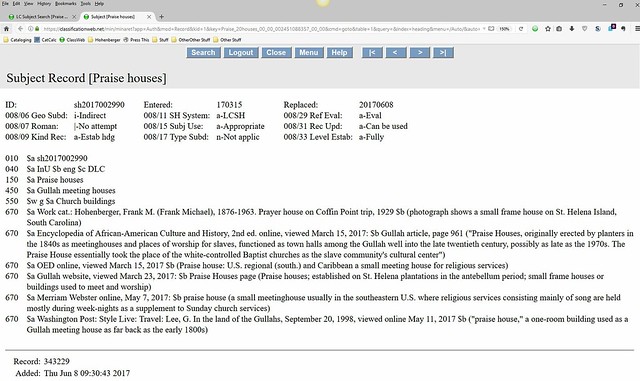
I’ve talked about this before. One of the projects I’m involved with at work is adding metadata to a collection of photographs by Frank Hohenberger. It’s fun! And I occasionally blog about some of the photos I’m working on. There are two photos in the collection of praise houses. Only Hohenberger called them “prayer houses,” and his titles are sacrosanct, so we can’t edit them. We also couldn’t add a subject heading for “praise houses,” because the term did not exist in either the Library of Congress subject authority file or the Thesaurus for Graphic Materials subject list, and we can only pull terms from those two sources.

Maybe that doesn’t seem like a big deal. The terms praise house and prayer house sound fairly similar, right? So people could find the praise house images by just doing a keyword search. But it is a big deal. Praise houses are a very specific, unique thing, and no one who is searching for praise houses will think to search for prayer houses, instead. So without being able to add a subject for praise houses, a keyword search for the term won’t work (our keyword search is literal and cannot understand that prayer and praise are synonymous-ish). That means that these images, which might be of interest to folks studying African American history or the Gullah people, would not be findable. They were basically hidden from view.

So I’ve nagged and nagged and nagged, over the course of the last 5-6 years (yes, really), until I finally was able to hash out a plan of action with a SACO cataloger. I gave her all my research on praise houses, and last February, she started working on submitting a proposal to LC for a new praise houses subject heading. We didn’t expect it to pass on the first round, but it did, and it is now live.

Praise Houses

This may seem kind of wonk-ish and boring, but it is a big deal to me, personally.

Genealogy

Oxydonor

Atlanta City Directory 1912
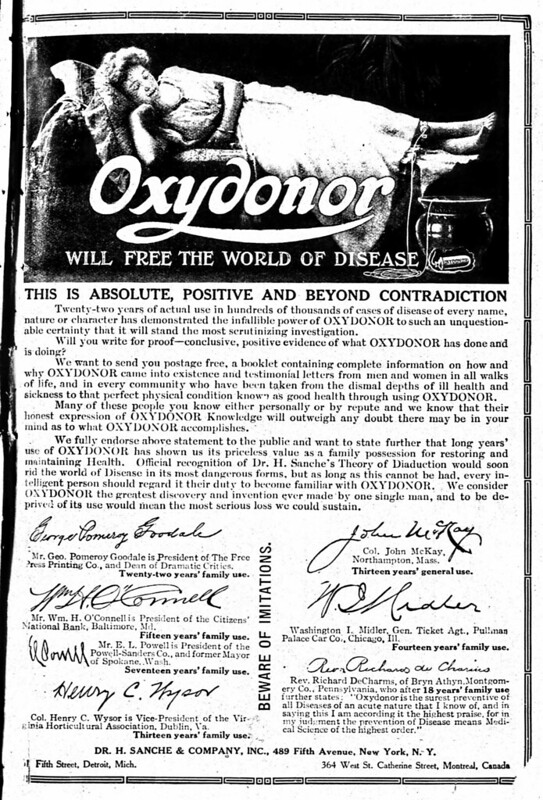
Oxydonor advertisement, Atlanta City Directory, 1912

And now for a little snake oil quackery, from the 1912 Atlanta City Directory. Seems legit, no?

Atlanta City Directory 1870
Map of Atlanta, Atlanta City Directory, 1870

I also found a helpful map in the 1870 directory. I’ve been trawling the Atlanta directories for what seems like years. Some of the streets my people lived on don’t exist anymore, so this was incredibly helpful.

Tedium

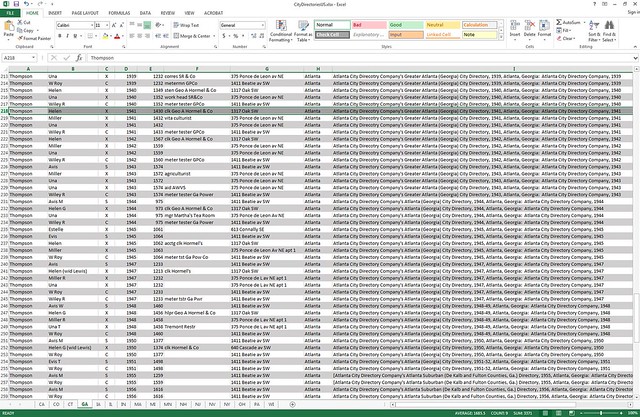
This is just as tedious as it looks. I’ve been tracking everyone I find in the city directories. This way I can sort by street address, year, name, or whatever. And I’ve added the source info, too, so that it’s easy to just copy and paste into the source citation in Legacy.

Uncategorized

Target Met


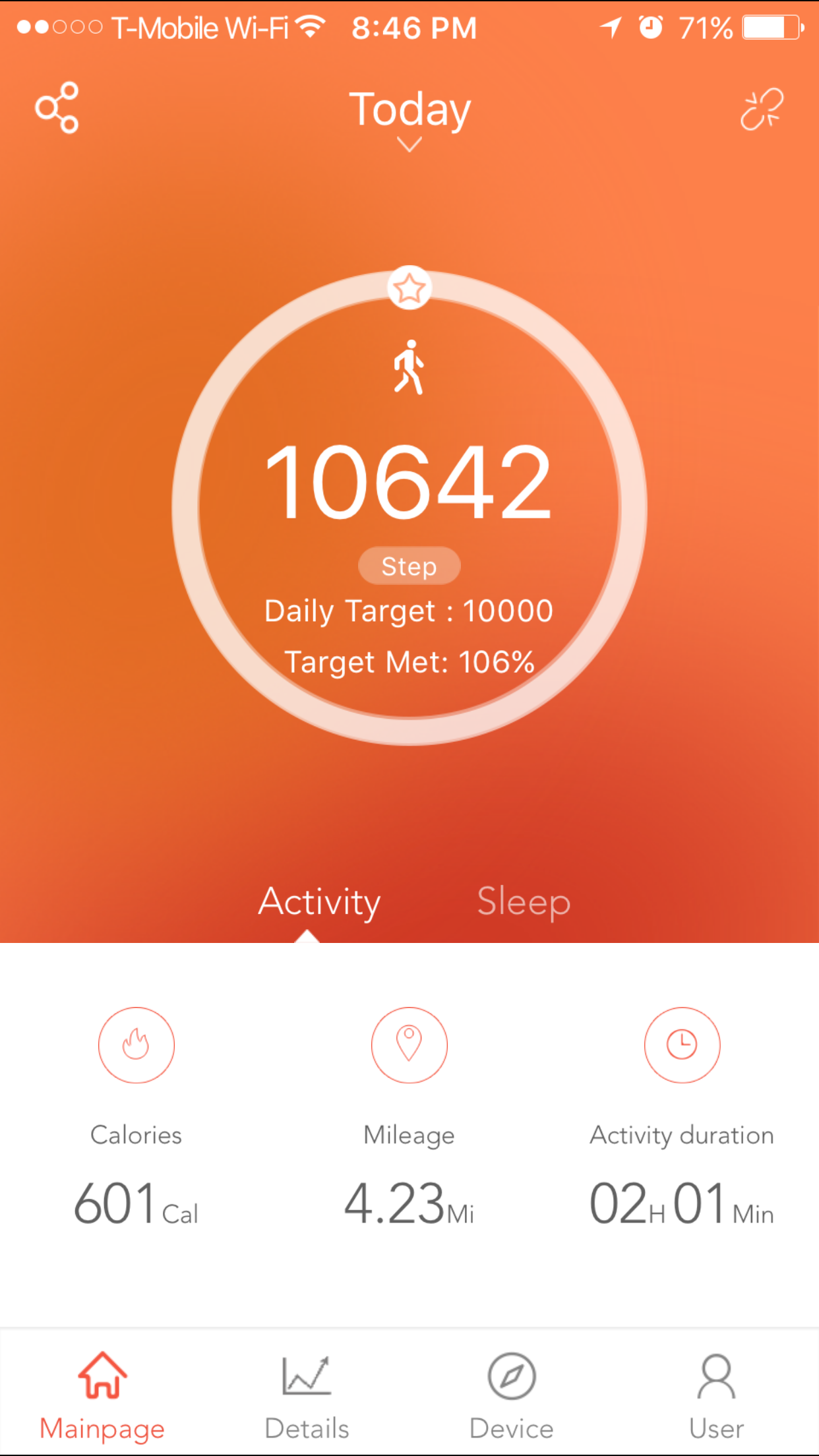
This means I can go to bed early, right?  

This was a super cheap FitBit knock-off. No regrets!  It’s worked well, and the battery life is great. I also think the sleep tracker is a bit better than my old FitBit. 

Genealogy

Samuel Thompson 1736-1794

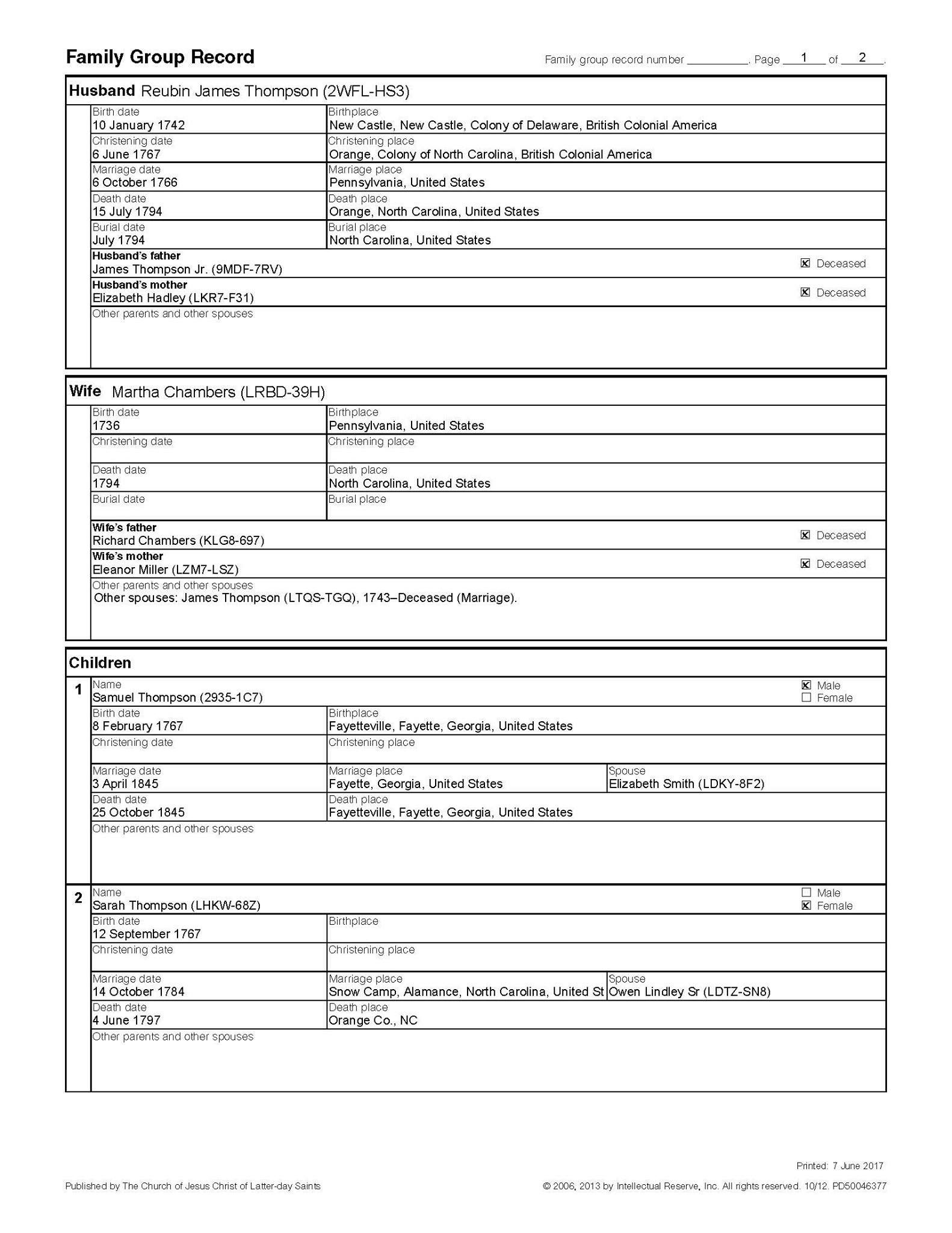
This is a problem. I find a whole slew of trees, including the world tree at FamilySearch, that have Samuel (my many times great grandfather) attached as a son to Reuben James Thompson and Martha Chambers. James Thompson and Martha Chambers were Quakers who married in 1766 in Delaware Colony, as this family group sheet from FamilySearch would indicate.  There are marriage and will documents to support that. But at some point they migrated to Orange County, North Carolina. There is no indication that:
A) James was ever known by the name Reuben (maybe he was, but I haven’t found evidence of it yet), and 

B) that they had a son named Samuel (James’ will lists his other children, but no Samuel), and 

C) that James ever set foot in Georgia. How is Samuel born in Fayette County, Georgia in 1767? That area was Creek Indian territory. It was not taken by whites until the 1821 Georgia land lottery, so I am confident that it was 100% not settled by the newborn Samuel in 1767.

I don’t know what the answer is, but this is a hot mess. Did not one single person stop and question what they were importing into their family tree? As far as I can tell, the Thompson trail documentation goes cold at Samuel, and there is no evidence that he can be attached to James Thompson and Martha Chambers.

Genealogy

Problem Solving

Problem Solving

I cannot for the life of me figure out which child the grandchildren belong to. I hate these sorts of loose ends, but since Martha was a second wife, and not an actual ancestor, I’m going to try to let it go.

Genealogy

Don’t Lend Your Directory

Don't Lend Your Directory
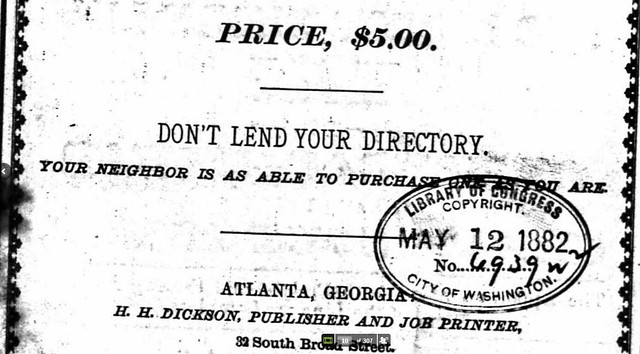
Don’t lend your directory. Your neighbor is as able to purchase one as you are.

The 1882 Atlanta city directoey cost $5. The inflation calculator I used says that’s $110 in 2015 dollars. I think I’d lend mine to my neighbors. It’s not like someone who couldn’t afford one would magically be able to purchase one, if their neighbor decided to be a stingy noshareasaurus. (Kinda like file sharing. No one has been able to prove that it hurts sales.)

In genealogy news, I got all the Atlanta city directory entries for James R. Thompson and Martha J. Edmonds entered into Excel and Legacy. That was a monumental task. I still have the rest of the Atlanta Thompsons to do, but it’s a start.

Genealogy

Fire on the SS City of Philadelphia

I found a thing! My mom said that when my great grandma Nell came over from Ireland, there was a fire on-board the ship while it was waiting to dock. I haven’t had any luck finding info about it, and I suspected it wasn’t a big enough deal to warrant news coverage. But I thought I’d trawl area newspapers for 2 Oct 1916 (she arrived on 1 Oct 1916, on the SS City of Philadelphia, and I doubted it would have been in any papers before the following day). I hit the jackpot.

Liner Philadelphia Fought Fire at Sea
“Liner Philadelphia Fought Fire at Sea,” The Sun, 2 Oct 1916, p. 1, col. 5; digital images, Library of Congress (http://www.loc.gov/ : accessed 4 Jun 2017), Chronicling America

Liner Philadelphia Fought Fire at Sea

American Steamship, 646 Passengers Oblivious of Peril, Docks Here.

Secret Known to Few

Blaze in Hold, Discovered off Grand Banks, Smothered by Steam.

A fire smouldering in her after hold unknown to all except a few discreet and favored persons among her 646 passengers, the American liner Philadelphia, from Liverpool, anchored at Quarantine yesterday morning. Included in her 110 cabin voyagers were several distinguished Americans and Britons. Capt. Candy did not let Quarantine officials know anything about the fire, and as there were no outward signs of it aboard the ship news men down the bay asked no question. Even after the steamship had docked little information was available from the passengers, and nearly all wanted to know from their questioners if there really had been a blaze at sea.

Miss Elsie Mackay, leading lady for Sir Beerbohm Tree, who was a passenger, when asked how she felt being on a burning ship, remarked in startled surprise:

“Fire? Why, nobody told me anything about a fire. That was what must have made it so hot in the saloon on Thursday evening.”

Sir Beerbohm Tree was also completely in the dark. This was due in part, he said, to his being a poor seaman, preferring the seclusion of his cabin most of the trip and not really caring whether or not disaster menaced the ship, which is the usual disposition of a poor sea-goer.

Captain Admits Blaze on Liner.

Capt. Candy admitted the existence of the fire after the ship had been made fast to her pier, but he did not regard it seriously. Exactly what damage it has done, or may be doing, will not be known until this morning, when a force of longshoremen will enter No. 7 hold, next to the last on the ship, and remove the charred cargo, consisting mostly of baled cloth, dress goods, and women’s hats.

Among the few who knew the captain’s secret was Dr. Joseph Byrne. An officer whom he knows well told him on Thursday afternoon, just after Chief Engineer Joyce had turned steam into the hold where the fire was, on condition that he keep the information from all other passengers. The doctor is a nerve specialist, and soon recovered his composure. A little later he studied the effect of the secret on the stewards, all of whom had been informed of the fire so they would be prepared for any emergency.

Stewards Pale and Silent.

The stewards looked paler than usual and were unusually quiet the rest of the trip. A steward delights in giving passengers exclusive information regarding almost anything, and absolute silence about the liner’s peril was a positive hardship. They were grave and occasionally talked in whispers. Meanwhile the passengers went about as if they hadn’t a care in all the world.

The natural reasons for keeping the travellers in the dark were the fear that if all hands knew about it the supersensitive and highstrung might suspect a plot to destroy the ship, or that there had been a secret submarine attack, or almost anything except the plain truth. Capt. Candy did not want to give his passengers any chance to misuse their fervent war imagination, and that is why he cautioned everybody to keep silent until the Philadelphia had put the last passenger ashore.

The saloon for several days was unusually hot. Some of the passengers remarked about it and asked the nearest steward why it was. But he adroitly attributed the warmth to the Gulf Stream, and that satisfied them. The heat, however, was due to the steam that was pouring through the perforated pipes of hold No. 7 and smothering the blaze.

Tells of Fire’s Discovery.

Capt. Candy said that early Thursday afternoon, when the Philadelphia was east of the Grand Banks, he learned that smoke was coming out of No. 7 hold. He went to Chief Engineer Joyce and steam was turned into the hold, the hatch of which is near the steerage dining room. Only a few passengers in the cabin knew about the fire and there was no confusion or excitement.

The captain said he had considerable anxiety for the well being of his 646 passengers and that is why he kept the knowledge of the fire from them. After the steam had been turned on an hour or so he went to the hatch and found the danger was apparently over. Smoke had ceased to pour out and steam was taking its place. He kept the steam on and it was still going when the ship docked and will continue to flow until longshoremen enter the hold this morning

Capt. Candy is inclined to believe that the fire was due to spontaneous combustion, perhaps in among the bales of cloth. Whether or not this is so will be ascertained this morning.